

- Written by: TST Metals
- July 5, 2024
Custom metal fabrication is a comprehensive manufacturing approach that transforms raw materials into precise, functional, and durable components. From concept development to final assembly, every stage of the fabrication process requires careful planning, advanced technology, and skilled craftsmanship to ensure accuracy and performance.
At TST Metals, we follow a structured and quality-focused fabrication process to deliver reliable solutions for industrial, commercial, and architectural applications across Saudi Arabia.
Design and Engineering Planning
The fabrication process begins with detailed design and engineering planning. Using CAD software and technical drawings, concepts are converted into accurate production-ready designs. Material selection, dimensional specifications, and structural requirements are carefully evaluated to ensure the final product meets both functional and industry standards.
Proper planning at this stage minimizes errors, optimizes production efficiency, and ensures cost-effective execution.
Cutting and Forming
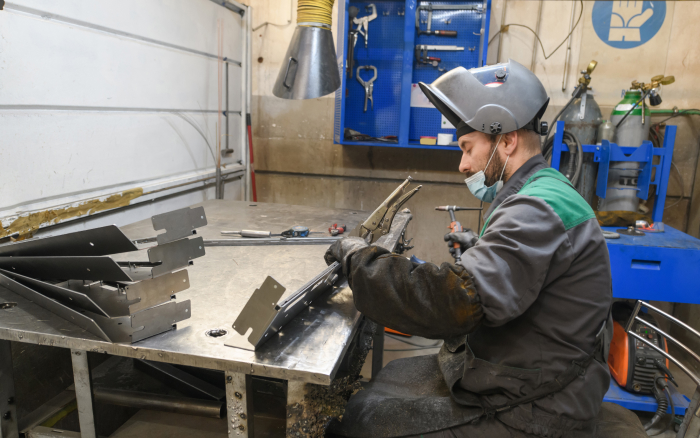
Once the design is finalized, materials move into the cutting and forming stage. Advanced laser cutting and CNC bending technologies are used to shape metal components with precision and consistency. These computer-controlled processes allow for tight tolerances, clean edges, and accurate repeatability across multiple units.
This stage ensures that each part aligns perfectly with the original design specifications.
Welding and Assembly
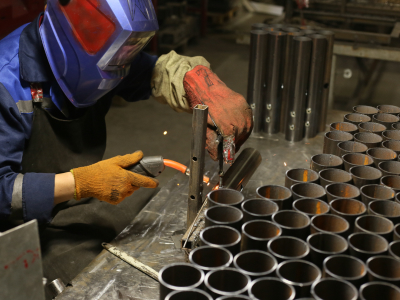
After cutting and forming, components are assembled and welded according to the project requirements. Skilled technicians ensure structural strength, alignment accuracy, and clean finishing during the assembly process. Depending on the application, additional reinforcement or structural fabrication may be incorporated to enhance durability and load-bearing capacity.
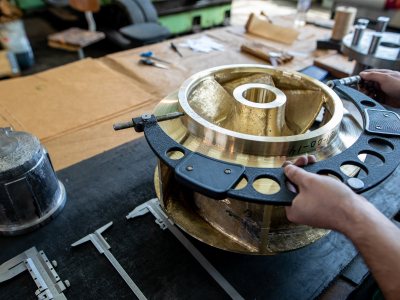
Quality inspections are conducted to verify strength, dimensions, and overall structural integrity.
Finishing and Final Inspection
The final stage involves surface finishing processes such as grinding, polishing, or powder coating, depending on the project needs. Finishing enhances both the durability and appearance of fabricated components while providing protection against corrosion and environmental exposure.
Before delivery, each product undergoes strict quality control checks to ensure it meets performance, safety, and aesthetic standards.
Conclusion
The custom metal fabrication process is a carefully coordinated sequence of design, cutting, forming, assembly, and finishing. Each step plays a critical role in delivering high-quality, durable, and precision-engineered results.
At TST Metals, our expertise, advanced machinery, and commitment to excellence allow us to provide end-to-end fabrication solutions tailored to the specific requirements of every client. Through innovation and precision, we turn concepts into reliable metal solutions built to perform.